 AutoMax
Getting started
The web UI
What the AutoMax web application offers and how it relates to the CLI.
What you'll learn
What each page of the web application does, which role can do what, and why the UI never does anything the CLI cannot.
Start it
bun run automax users create --admin
bun run automax serve                 # http://127.0.0.1:4444
The server is a Fastify application. It spawns the same automax commands you run by hand and streams their logs over Server-Sent Events, so a run started from a browser looks exactly like one started from a terminal.
Pages
| Page | What it does |
|---|---|
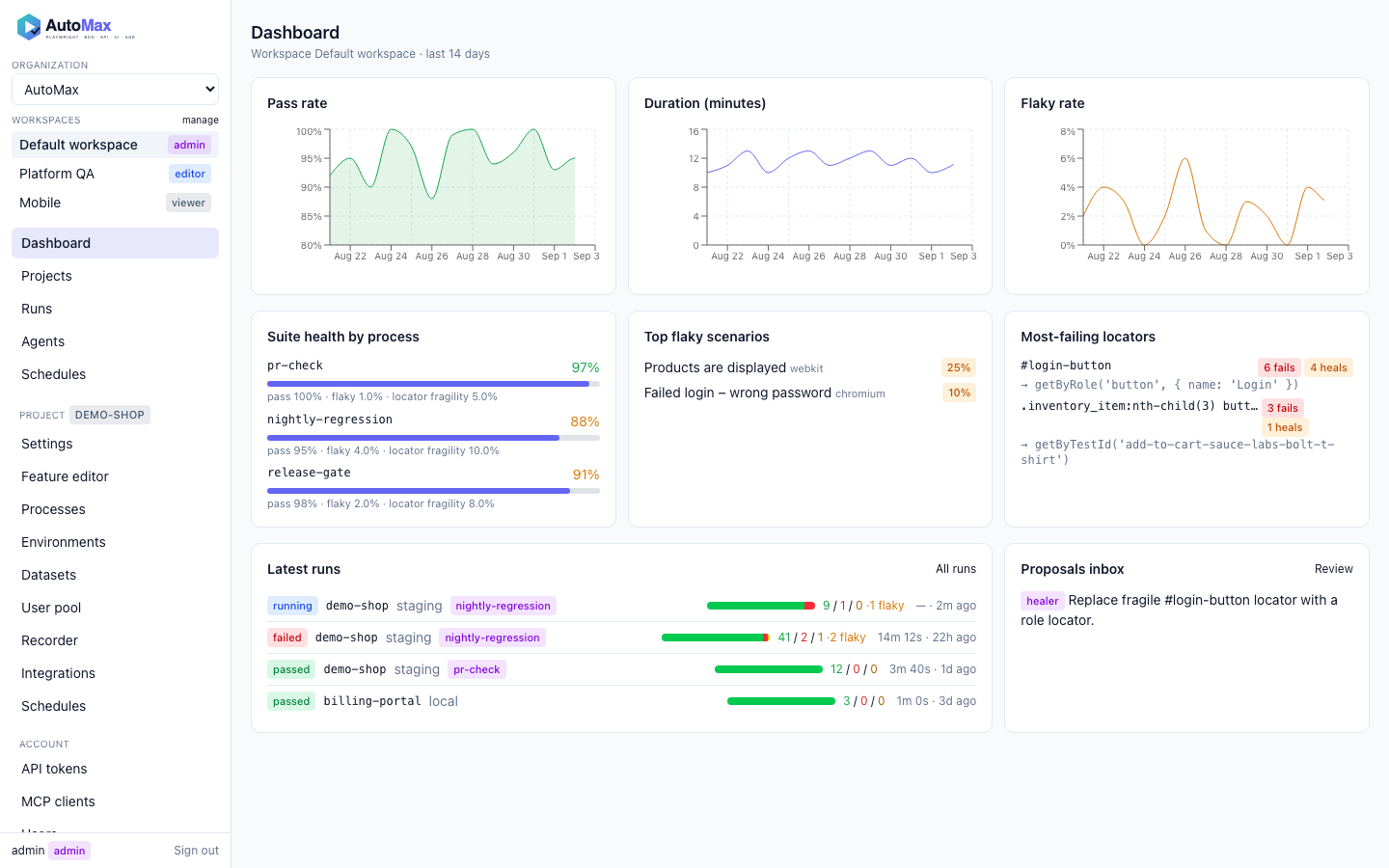
| Dashboard | pass-rate, duration and flaky trends; most-failing locators; latest runs; proposals inbox |
| Projects | the project YAML as a form: layers, browsers, tag policy, screenshot policy, integrations, MCP servers |
| Environments | base URLs and non-secret settings; secret names shown with a presence indicator |
| Datasets | upload CSV, JSON or YAML, preview the first rows, choose file or database storage |
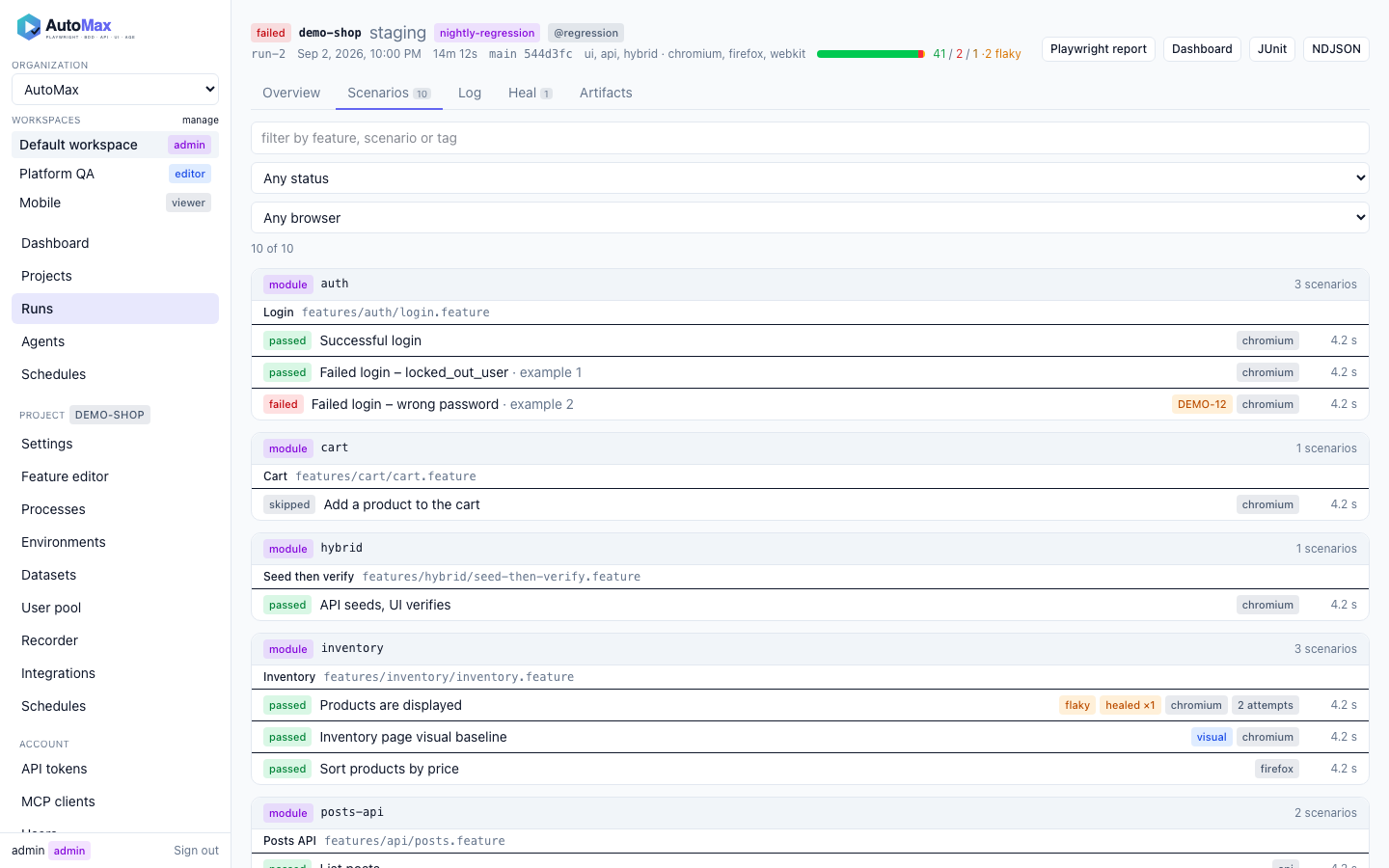
| Runs | filterable list, live log, scenario tree, step timeline with before/after comparison and API panels |
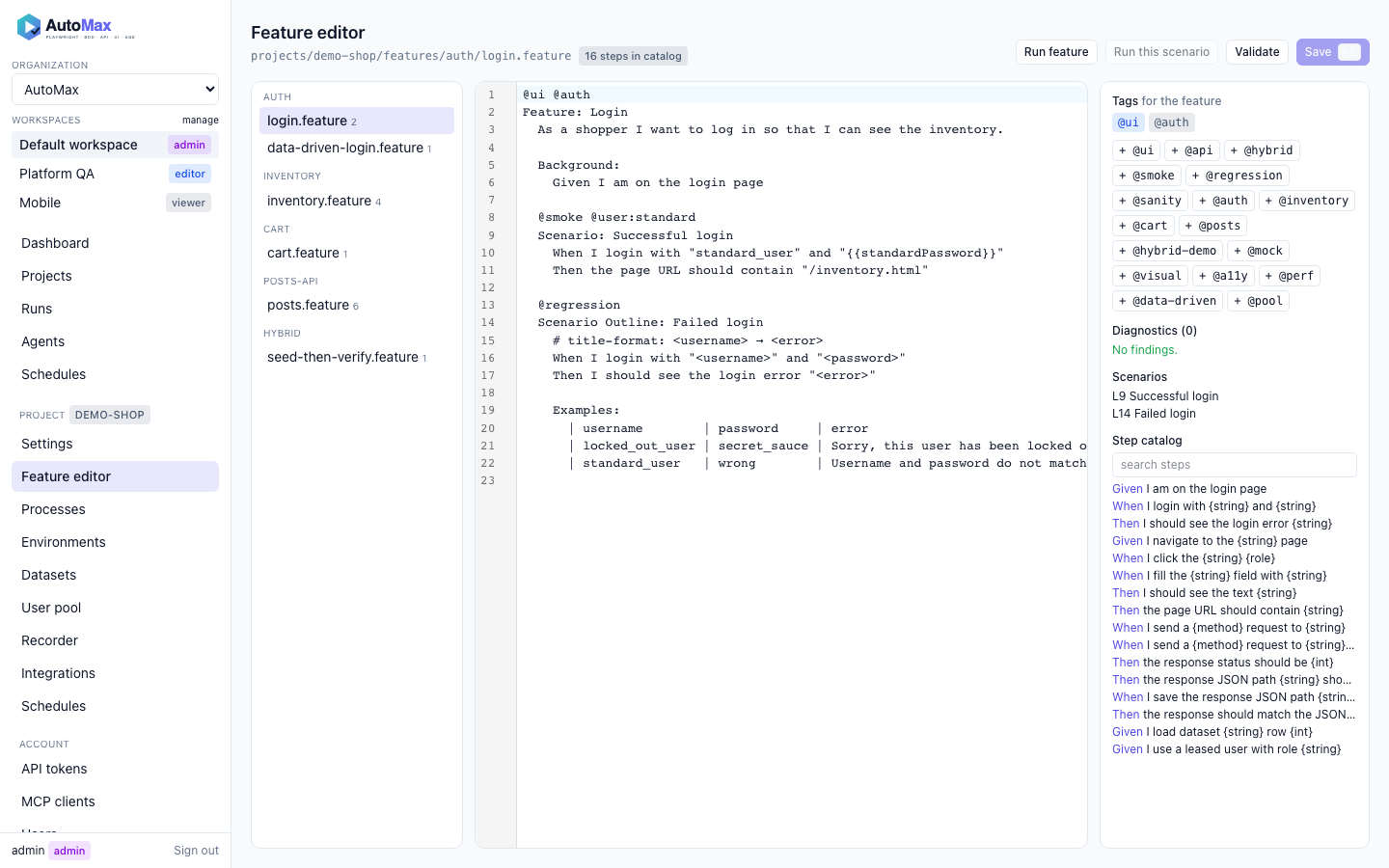
| Feature editor | Gherkin editing with step completion from your project, lint diagnostics, run this scenario |
| Recorder | launch Playwright codegen with a pool user, save the spec, convert it with an agent |
| Agents | start a role, watch it work, review the diff, accept or reject |
| Integrations | GitHub and Jira settings, connection tests, MCP servers the project consumes |
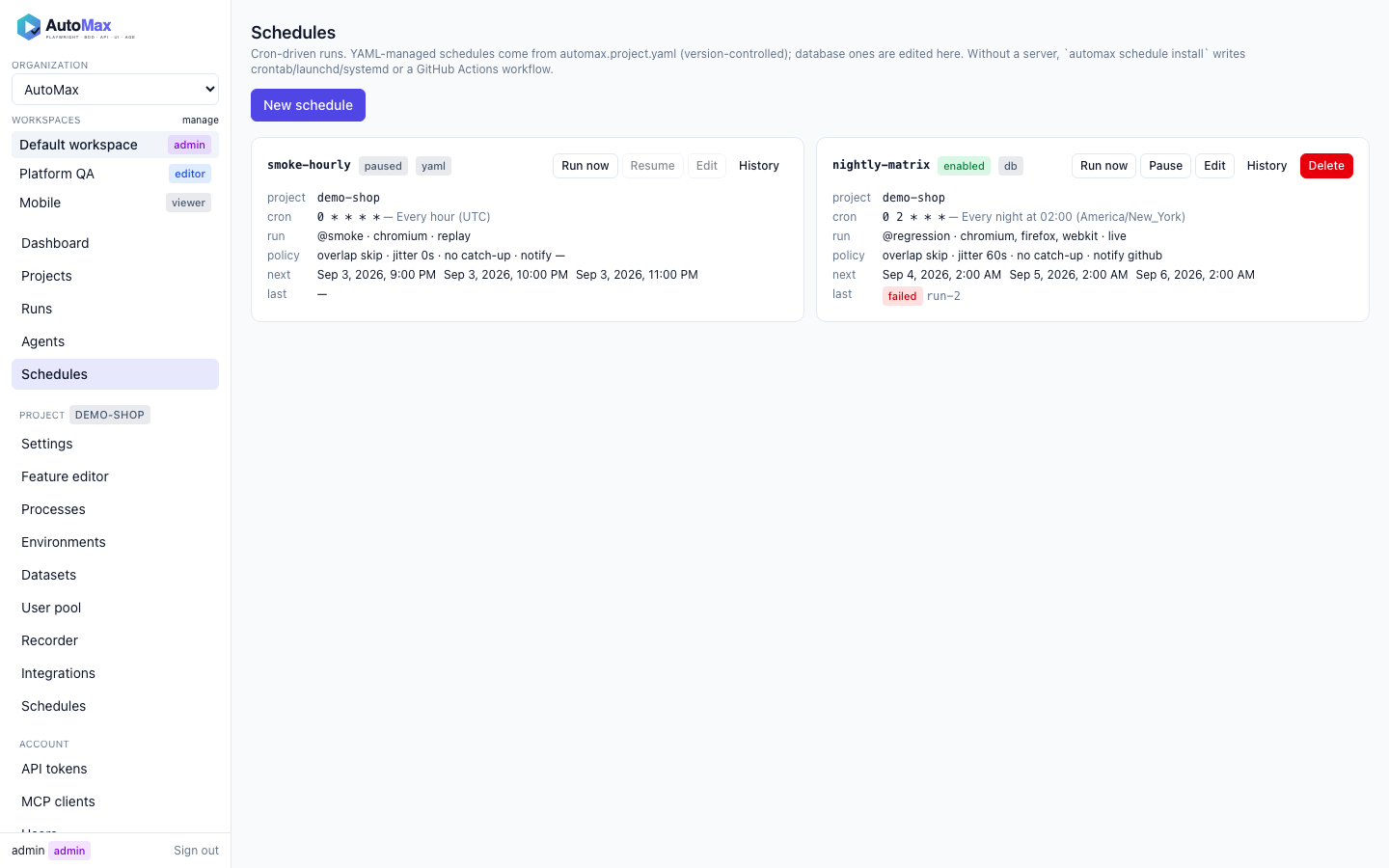
| Schedules | cron builder with the next fire times, history, pause and resume |
| Users, Settings | roles, free scoped API tokens, MCP client install snippets |
Roles
| Role | Can |
|---|---|
| viewer | read everything, download artifacts |
| editor | start and stop runs, edit features and datasets, run agents, accept proposals |
| admin | manage users, integrations, projects, tokens |
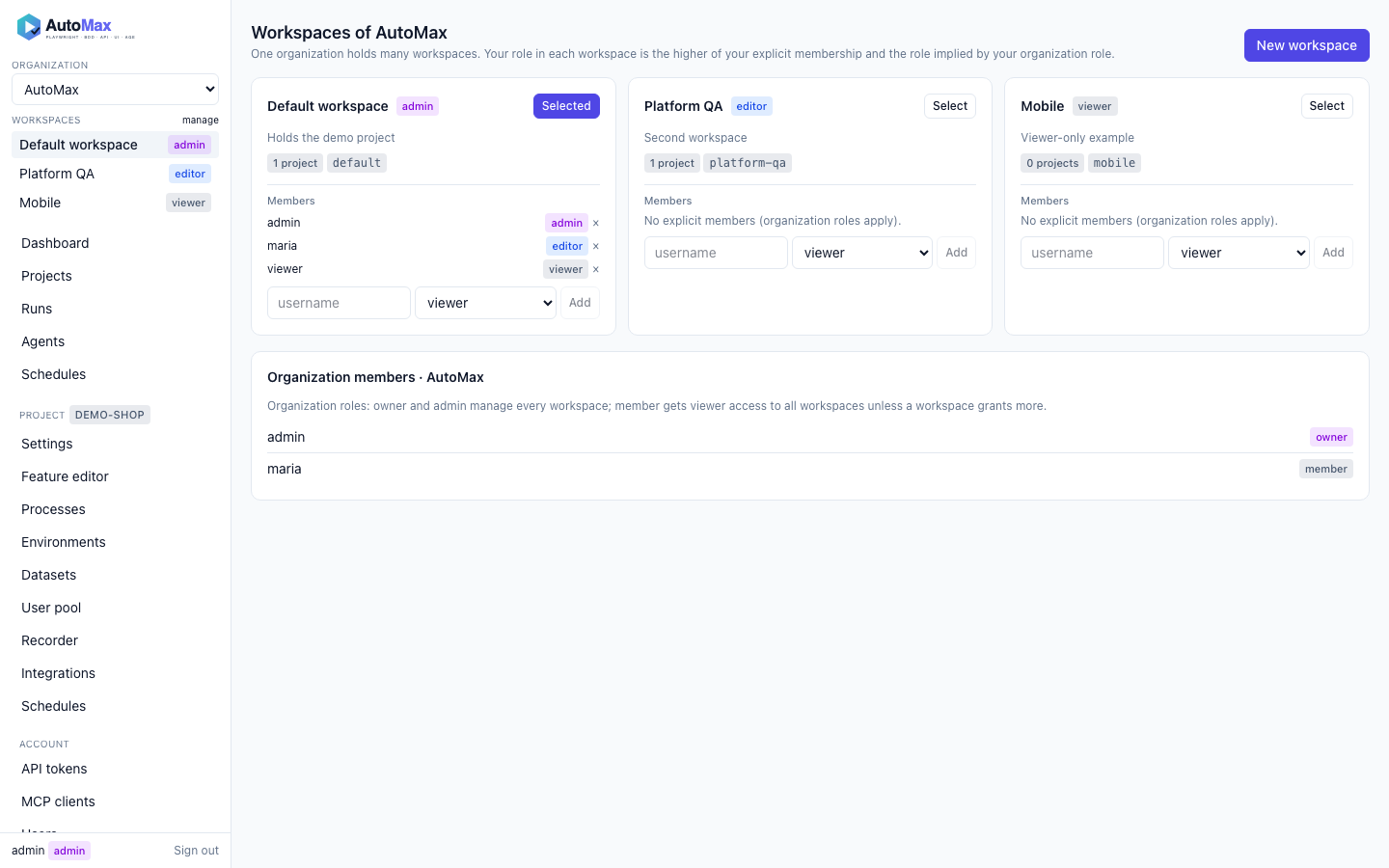
Roles are per workspace: a user's effective role is the stronger of the explicit workspace membership and the one implied by the organization membership (member → viewer, admin and owner → admin). Platform admins are admin everywhere.